Skip to content
AquaReefBasin

Gear

Decorative Stones & Pebbles

These are decorative stones. They are sold for planters, vases, terrariums and tanks, and they are here because people put them in aquariums. What follows is the honest version of what that means, and it is more caveat than sales copy — if you want a category page that tells you a bag of pebbles is a safe purchase, this is not it.

Core job: looks, with the caveats stated plainly · 4 products listed

Read this first

  • None of these listings states that the stones are inert or aquarium-safe, and this site does not make that claim on the manufacturer's behalf. No bag here is suitable for every tank.
  • Carbonate rock — limestone, marble and many mixed river stones — will raise carbonate hardness and pH as it slowly dissolves. That is a real effect on your water chemistry, not a theoretical one.
  • Checking and rinsing is the buyer's job. A common approach is to test a sample in a jar of water and watch pH and KH over a week or two before committing a bag to a stocked tank.
  • For species that need soft, acidic water, unidentified mixed stone is a genuine risk. If you keep them, either identify the rock or leave it in the vase it was sold for.

What actually separates one from another

  • Stone size, which is the one specification these listings actually state and the one that decides how the substrate looks and how debris settles into it.
  • Whether the stones are polished or raw, since polished river stone is smoother against bottom-dwelling fish.
  • How much surface area the size grade creates. Fine grades pack tightly and trap waste; larger stones let debris fall between them out of reach of a vacuum.
  • That none of it tells you anything about what the rock is made of, which is the part that matters chemically.

Side by side

Decorative Stones & Pebbles — 4 products
ProductKey specBest for
OUPENG Polished Pebbles, 2 lb0.5 - 1.2 in, 2 lbA decorative accent where the largest stone size in this group is the look you want.
YISZM Succulent and Cactus Gravel, 2 lb1/5 in, 2 lbA fine decorative layer where keeping waste on the surface is the priority.
FANTIAN Polished Pebbles, 3/8 in3/8 in river rockA middle-grade decorative layer where neither fine nor coarse suits the look.
Virekm Decorative River RocksOrnamental river pebblesDecorative use where the exact grade matters less than the general river-rock look.

The products

  • OUPENG Polished Pebbles, 2 lb

    Core pick

    OUPENG Polished Pebbles, 2 lb

    0.5 - 1.2 in, 2 lb

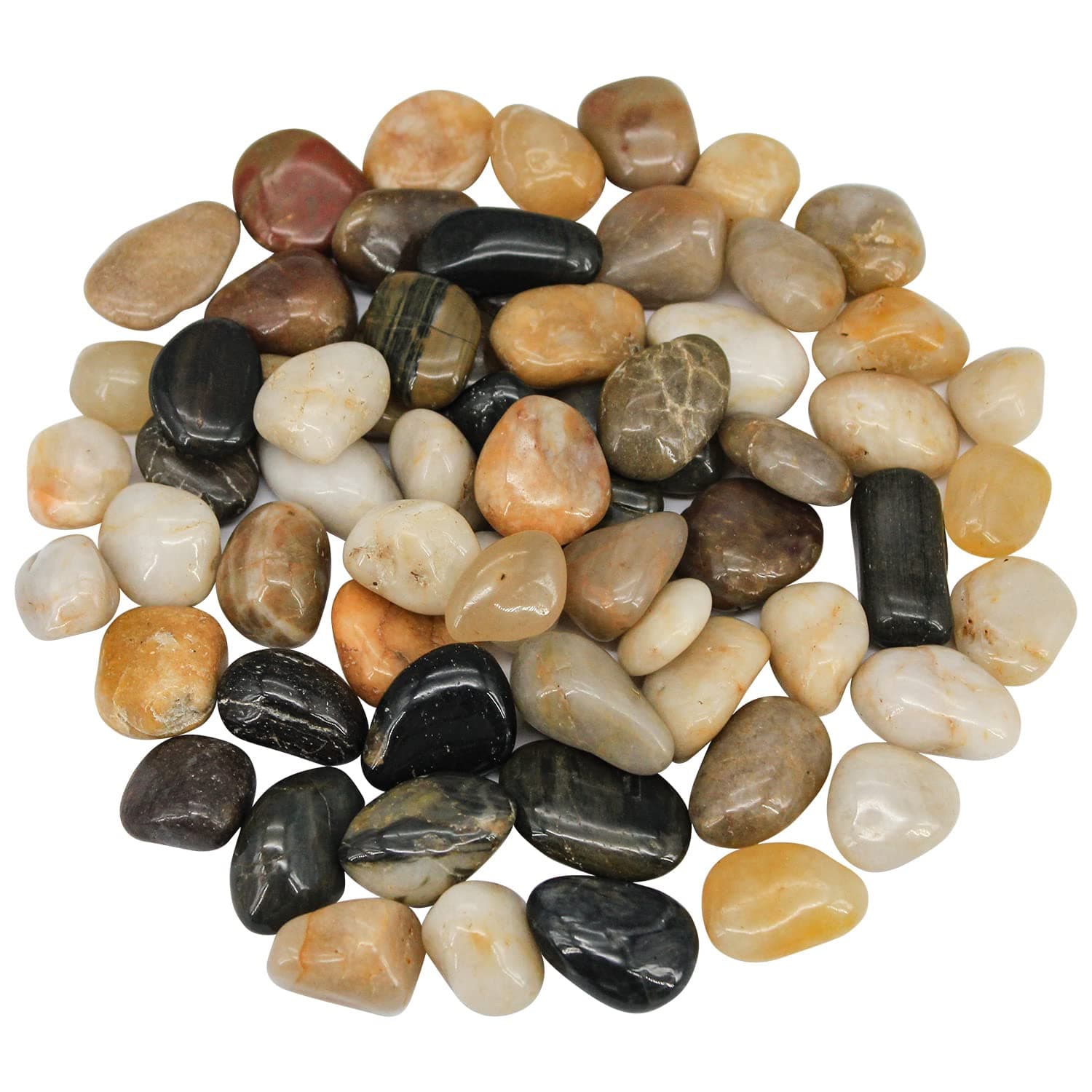
    Two pounds of polished mixed-color river stones in a 0.5 to 1.2 inch size range, the largest grade in this category. Larger stones sit loosely and let debris fall between them, which is a look rather than a filtration benefit. The listing makes no claim about what the rock is made of, and neither do we.

    Why this badgeAt 0.5 to 1.2 in these are the largest stones listed here, and stone size is the one specification these listings actually state.

    The listing states these are 0.5 to 1.2 inch mixed color river stones, supplied as 2 lb.

    Good

    • The largest stated size range here, at 0.5 to 1.2 inches.
    • Polished surfaces are smoother than raw crushed stone.
    • Mixed colors give a natural river-bed appearance rather than a uniform one.
    • Two pounds is a manageable quantity for a decorative accent rather than a full bed.

    Watch out

    • The listing states nothing about inertness, so the effect on KH and pH is unknown until you test it.
    • Large stones let waste fall between them where a vacuum cannot reach.
    • Mixed color means mixed rock type, which makes identification harder rather than easier.

    Best forA decorative accent where the largest stone size in this group is the look you want.
    Check it on Amazon
  • YISZM Succulent and Cactus Gravel, 2 lb

    Finest grade

    YISZM Succulent and Cactus Gravel, 2 lb

    1/5 in, 2 lb

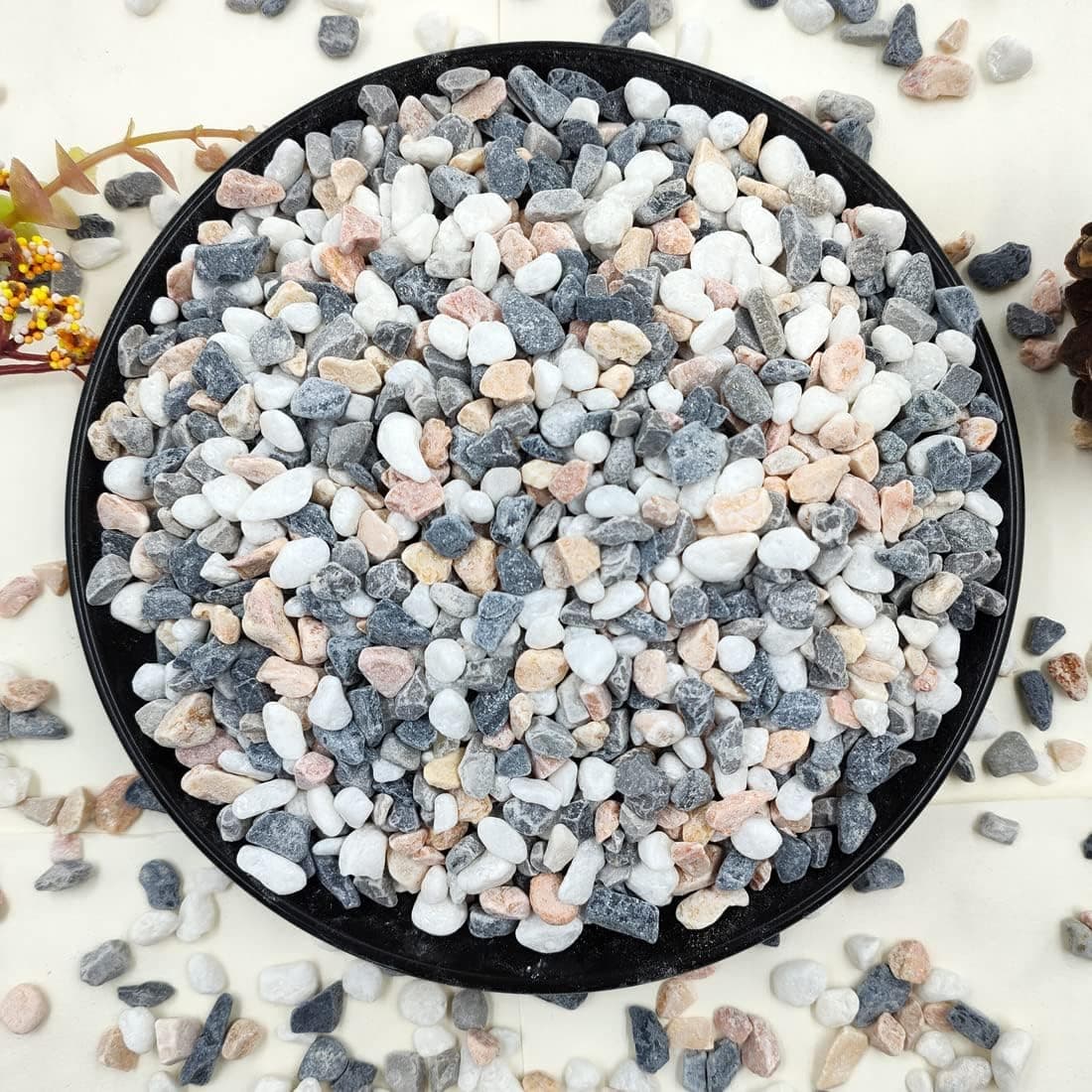
    Two pounds of 1/5 inch polished stones, the finest grade here, sold for succulents and cacti. Fine grades pack tightly, which keeps waste on the surface where a siphon can reach it — but they also compact, and compacted beds develop low-oxygen pockets. Nothing in the listing addresses aquarium suitability.

    Why this badgeAt 1/5 inch these are the smallest stones listed in this category.

    The listing states these are 1/5 inch mixed color polished stones, supplied as 2 lb.

    Good

    • The smallest grade here at 1/5 inch, which keeps debris on the surface rather than deep in the bed.
    • Polished rather than sharp-edged.
    • Mixed colors in a fine grade read as a natural sand-and-gravel mix.
    • Two pounds covers a small footprint at this grain size.

    Watch out

    • No inertness claim in the listing, so the effect on water chemistry is untested until you test it.
    • Fine grades compact over time and can develop anaerobic pockets if never disturbed.
    • Sold for planters and succulents, so nothing about the description is aquarium-specific.

    Best forA fine decorative layer where keeping waste on the surface is the priority.

    Check it on Amazon
  • FANTIAN Polished Pebbles, 3/8 in

    Middle grade

    FANTIAN Polished Pebbles, 3/8 in

    3/8 in river rock

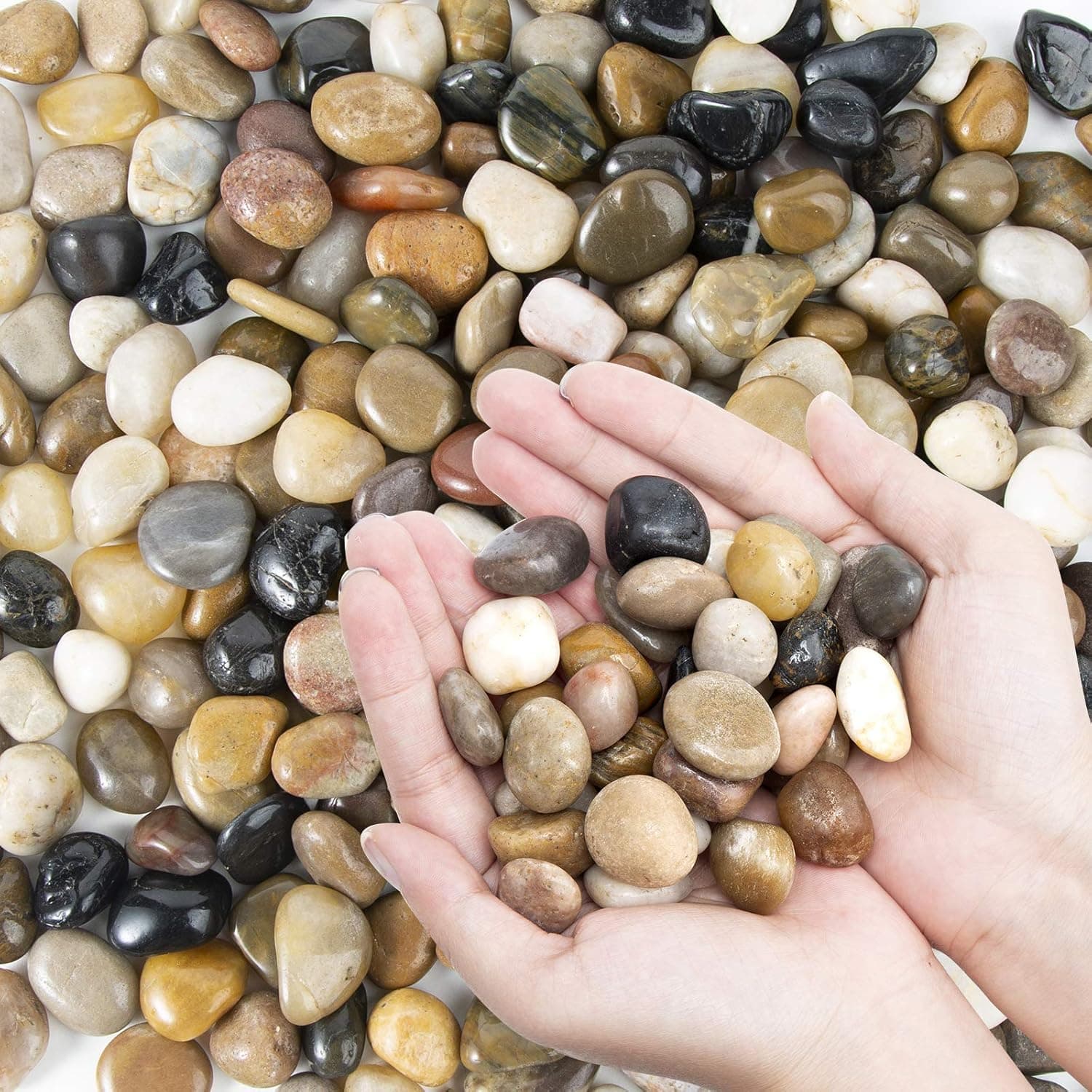
    Decorative river rocks at 3/8 inch, sitting between the fine and coarse grades in this category. The listing mentions tanks among its uses, which is a use case rather than a suitability claim — it says nothing about what the stone is made of or how it behaves in water.

    Why this badgeAt 3/8 inch these sit between the 1/5 inch and the 0.5 to 1.2 inch grades in this category.

    The listing states these are 3/8 inch decorative river rocks for planters, vases and tanks.

    Good

    • A middle grade at 3/8 inch, between the fine and coarse options here.
    • River rock shape is rounded rather than angular.
    • Listed for planters, vases and tanks, so the size suits a decorative layer.
    • Mid grades vacuum more easily than either extreme.

    Watch out

    • The listing names tanks as a use but makes no inertness or aquarium-safety claim.
    • Mixed river rock is by definition mixed rock type, including possibly carbonate.
    • No stated weight in the listing details given here, so quantity planning needs checking on the product page.

    Best forA middle-grade decorative layer where neither fine nor coarse suits the look.

    Check it on Amazon
  • Virekm Decorative River Rocks

    Virekm Decorative River Rocks

    Ornamental river pebbles

    Ornamental pebbles listed for vases, tanks and garden use. The breadth of that use list is the honest summary of what this product is: a decorative stone with no aquarium-specific description attached. If it goes in a tank, the checking is yours to do.

    The listing states these are ornamental pebbles for vases, tanks and garden use.

    Good

    • Ornamental pebbles suited to a decorative role.
    • Listed across several uses, so a bag is not wasted if it does not suit the tank.
    • River rock form is rounded rather than sharp.
    • Straightforward, unelaborated listing with nothing overstated.

    Watch out

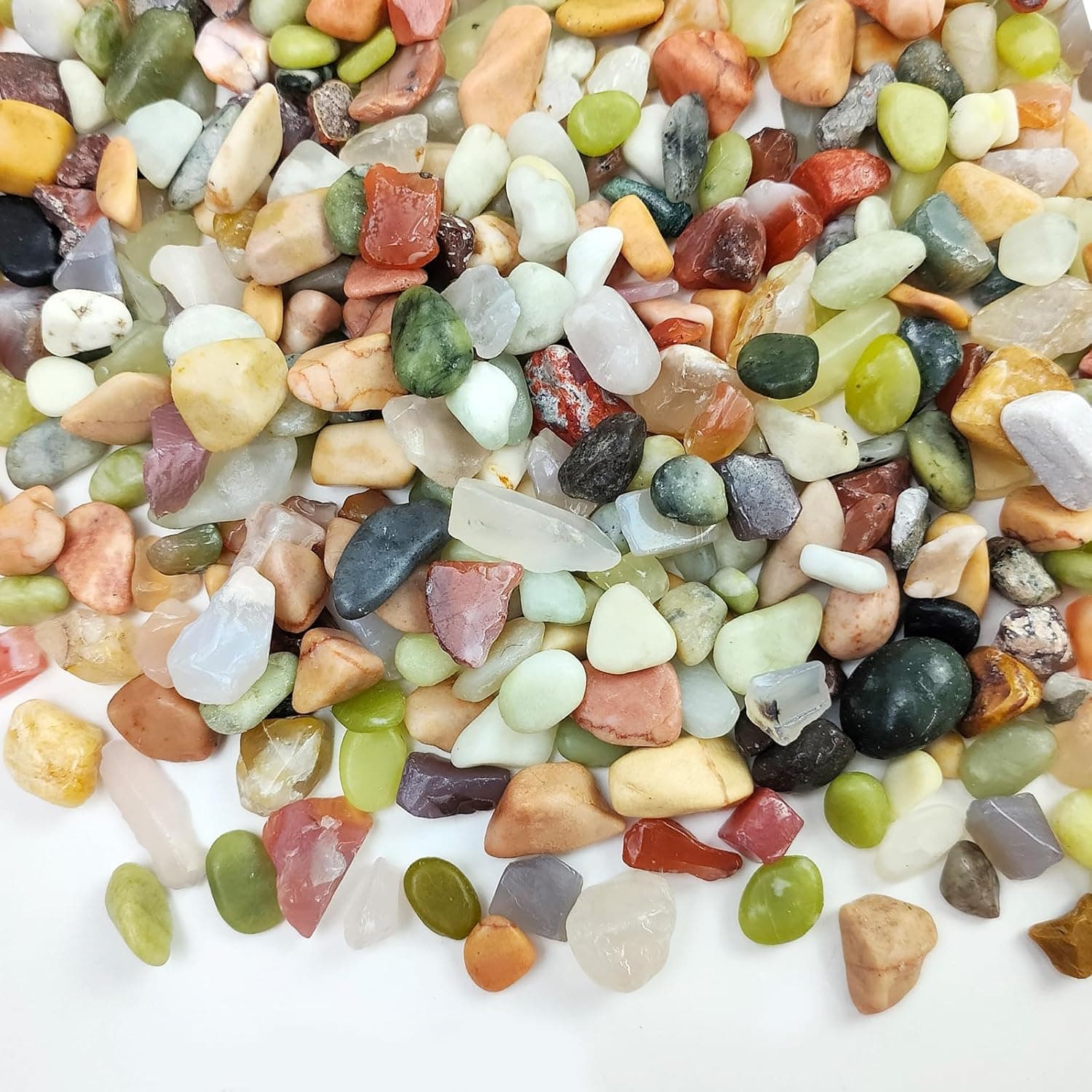
    • No stone size stated in the listing details given here, so the grade is unknown until it arrives.
    • No inertness or aquarium-safety claim of any kind.
    • Garden-use framing means it may arrive dustier than a product sold for indoor display.

    Best forDecorative use where the exact grade matters less than the general river-rock look.

    Check it on Amazon

Common questions

Are these safe for an aquarium?

The listings do not say so, and neither do we. They are decorative stones sold for a range of uses. Whether a particular bag is suitable for your tank depends on what the rock actually is, and that is something you have to check rather than assume.

How would I check?

The usual approach is to rinse a sample thoroughly, put it in a jar of water with known pH and KH, and test that water over a week or two. If KH and pH climb, the stone is carbonate and it will do the same thing in your tank, only slower and permanently.

What happens if the rock does raise hardness?

Your KH and pH drift upward and stay there. For hard-water species that may be welcome. For soft-water species it is a problem, and it is a slow one that you will not notice until the readings have already moved. This is why the jar test is worth two weeks.

Should I rinse them before use?

Yes, thoroughly, until the runoff is clear. Unrinsed stone carries dust that clouds a tank for days and can feed an early diatom bloom in a new setup.

Where this comes up

Parameters this category touches